Academics
our approach
Independence, Diversity & Language
At Estrellitas Montessori School, we create a warm and respectful learning environment where children feel safe, valued, and inspired to explore. Through a fully immersive Spanish Montessori experience, children are encouraged to grow at their own pace—building confidence, independence, and a genuine love of learning.
Rooted in Montessori principles and enriched by our diverse community in Washington, D.C., our approach supports natural language development while fostering empathy, cultural awareness, and meaningful connections that lay the foundation for lifelong learning.
Why Estrellitas?
Spanish Immersion Model
Language Learned Naturally Through the Absorbent Mind
At Estrellitas Montessori School, Spanish is lived—not taught. During early childhood, children experience a unique period of development known as the Absorbent Mind, when language is acquired naturally through meaningful interaction with the environment.
Through full Spanish immersion, children absorb the language effortlessly during daily routines, play, and purposeful work. Guided by native Spanish-speaking Montessori educators, children develop authentic pronunciation, comprehension, and confidence in Spanish—even if the language is not spoken at home.
Language learning at Estrellitas is deeply connected to culture. Through music, stories, celebrations, and everyday social experiences, children develop cultural awareness, empathy, and respect—skills that prepare them to thrive in an interconnected world.
Daily Routine
A Day at Estrellitas
Each day unfolds with a calm, predictable rhythm that helps children feel secure, confident, and ready to learn. Familiar routines support a smooth transition from home to school, with a flow guided by the needs of the children and the community—not the clock.
“Order is one of the needs of life which, when it is satisfied, produces a sense of security and happiness.”
Our daily rhythm includes:
- Shared Breakfast & Connection – A gentle start to the day through conversation.
- Circle Time – Building community and preparing for the day.
- Outdoor Exploration – Daily playground time and neighborhood walks, weather permitting.
- Movement Throughout the Day – Songs, games, and free movement.
- Lunch Time – A shared meal that encourages independence and social connection.
- Rest / Nap Time – A quiet period that supports physical and emotional well-being.
- Indoor Movement & Play – Purposeful movement when outdoor time is not possible.
Montessori Learning Areas


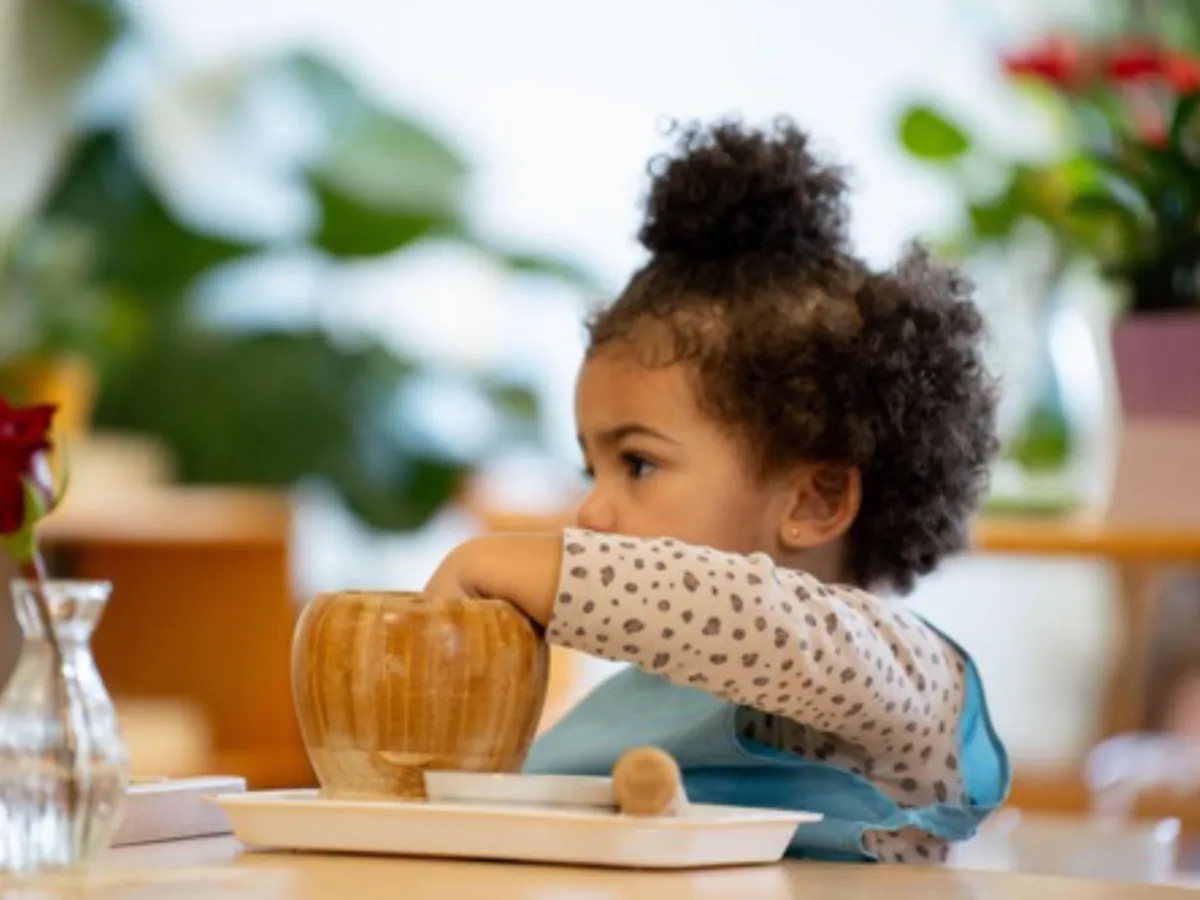
Practical Life
Everyday activities such as pouring, food preparation, self-care, and cleaning help children build independence, coordination, and confidence.
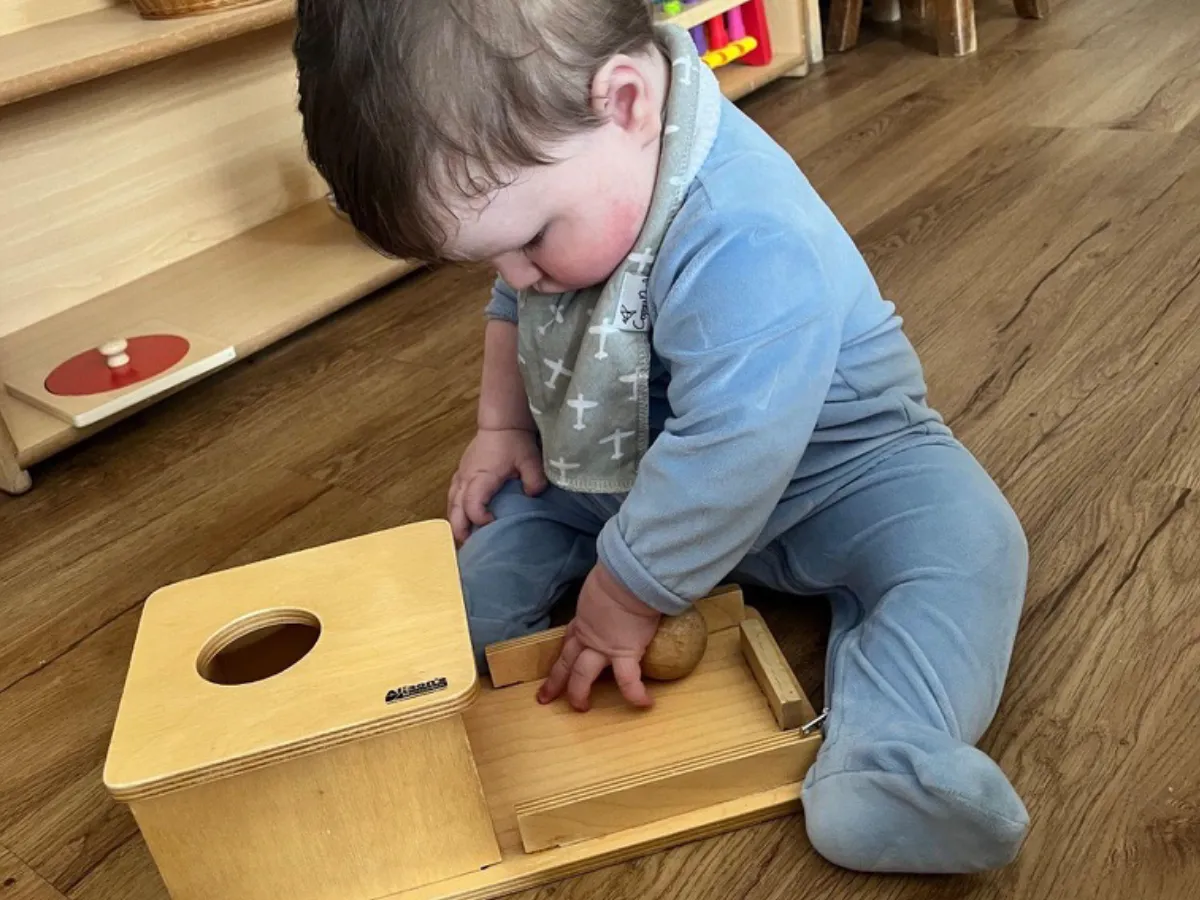
Sensorial
Hands-on Montessori materials refine the senses and support concentration, problem-solving, and early cognitive development.
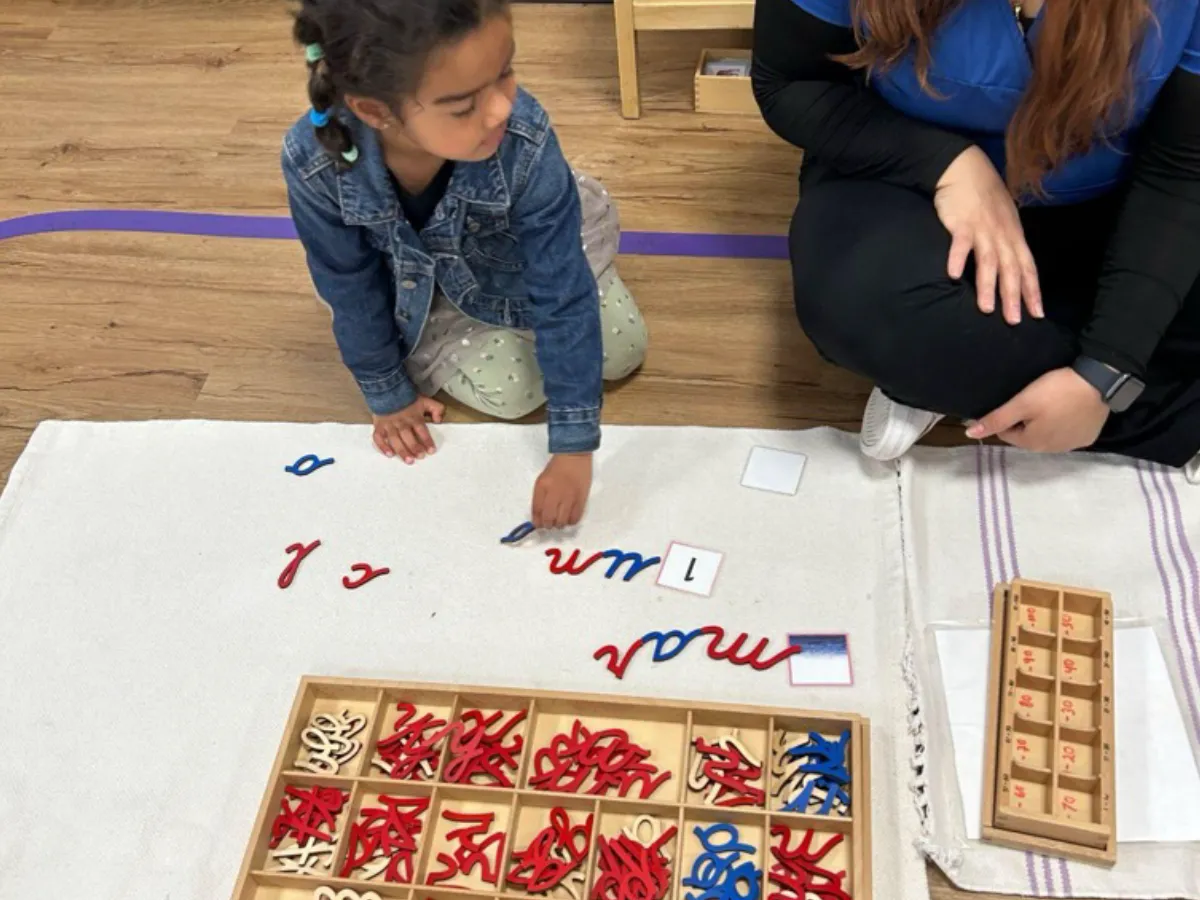
Language
Storytelling, songs, conversation, and full Spanish immersion support natural language development and communication skills.
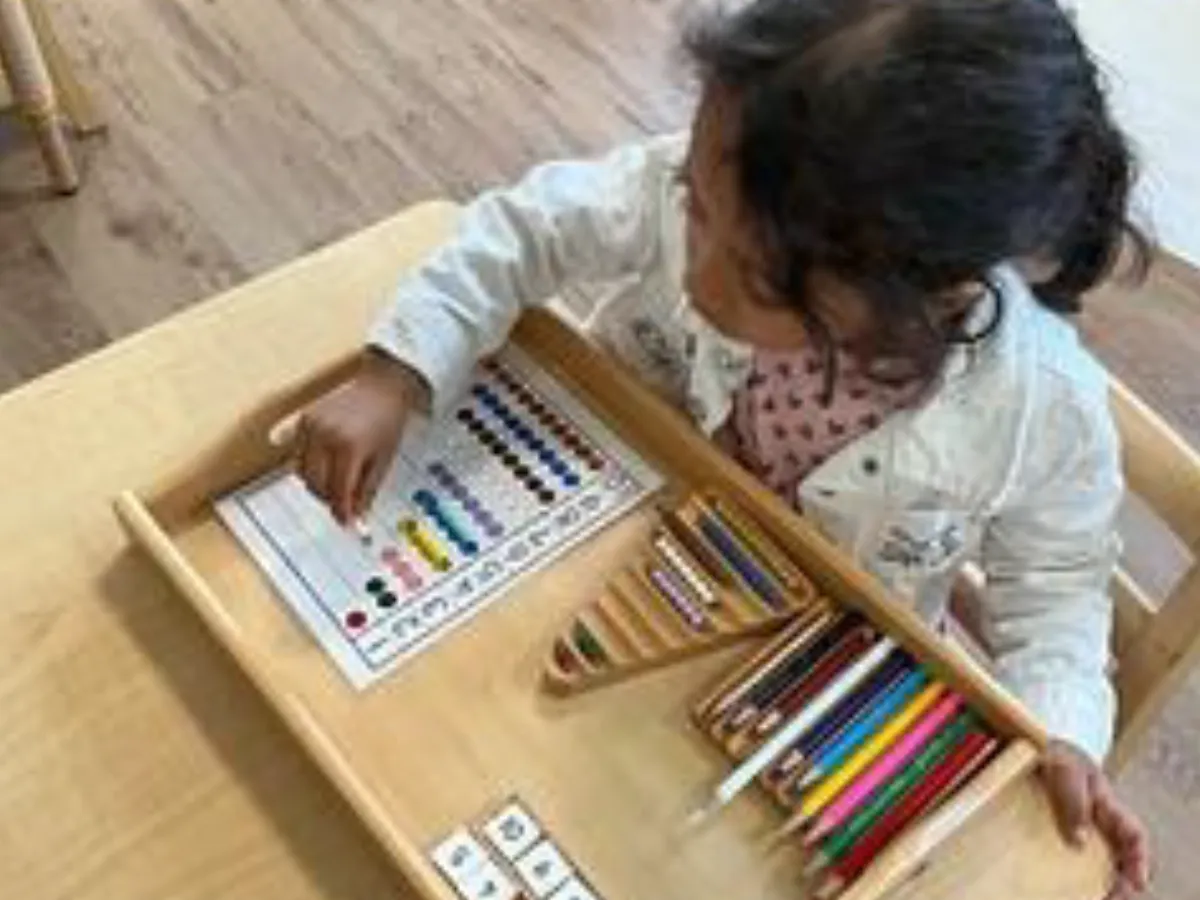
Mathematics
Concrete materials introduce numbers, quantity, shapes, and patterns in an intuitive and engaging way.
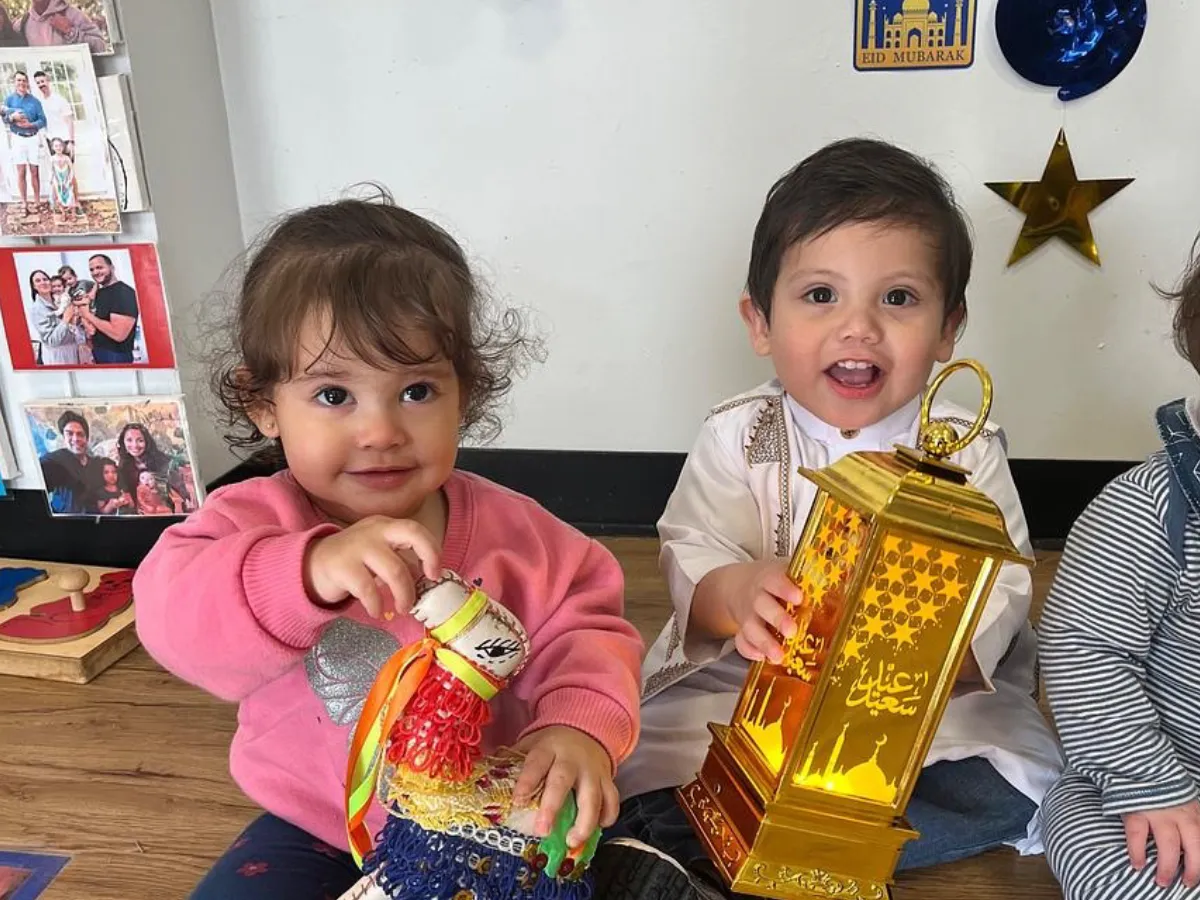
Art & Music
Creative experiences encourage self-expression, fine motor development, and joy in learning.
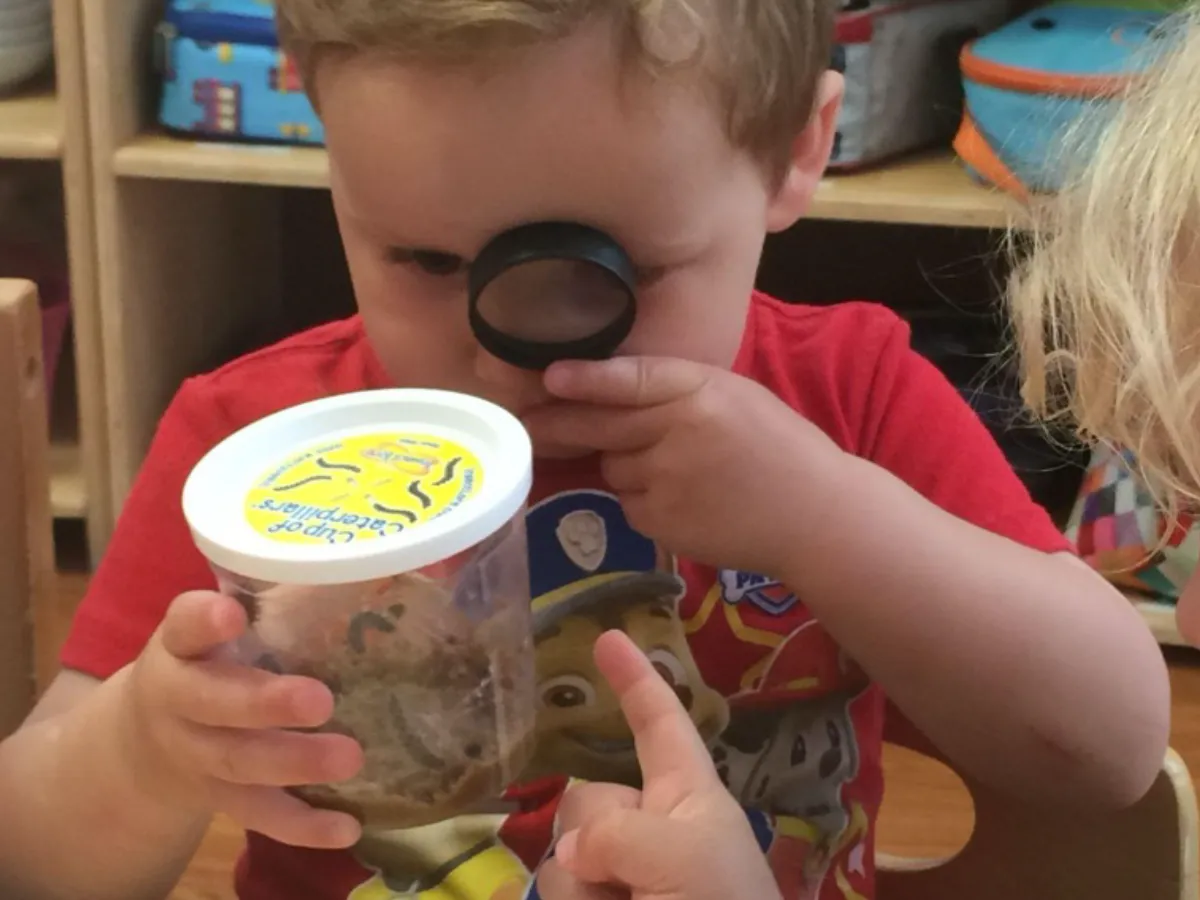
Cultural Studies
Children explore geography, traditions, and diverse cultures, fostering curiosity and global awareness.
classrooms
Experts in Nurturing Your Child’s Potential
Estrellitas Montessori provides a strong foundation for lifelong learning by placing children based on developmental readiness and available space. Mixed-age classrooms foster peer learning, leadership, and community. We prioritize each child’s individual growth with care, respect, and personalized attention.

Nido
A nurturing beginning rooted in trust, exploration, and discovery.
Classrooms include materials and structures that promote motor development—mirrors, soft mats, climbing elements, and sensory objects. As children grow, the environment evolves: cribs give way to low cots, high chairs to child-sized tables, and bottles to cups. We fully support nursing families and handle expressed breast milk with care and respect.
Gentle routines help children practice early independence, such as choosing activities, putting away materials, and transitioning calmly. Strong bonds with caregivers form the heart of the Nido experience.
In this dynamic stage, toddlers are active, curious, and eager to interact. They explore boundaries, develop language skills, and begin navigating both English and Spanish with increasing ease.
Guides offer freedom within structure, presenting children with three developmentally appropriate activity choices at a time. As readiness emerges, more complex lessons are introduced—honoring each child’s unique pace and interests.
Oruga’s classrooms emphasize emotional development, helping children name feelings, navigate frustration, and build early social relationships.

Orugas
Movement, language, social connection, and growing independence.

Mariposas
Confidence, curiosity, and social growth take flight.
Social development becomes central at this age: friendships form, sharing is practiced, and cooperation emerges. Guides support conflict resolution, emotional expression, and compassion.
Potty learning is approached gently and respectfully, following the child’s signs of readiness.
Children engage in extended work cycles—periods of uninterrupted activity that build focus, problem-solving, and persistence. Classrooms include materials for language, math, science, geography, art, and cultural studies.
Guides offer individualized lessons when children demonstrate readiness, encouraging academic progress without pressure or comparison. Pre-K students develop confidence, responsibility, and intrinsic motivation—hallmarks of Montessori education.

PRE-K/PKEEP
Leadership, academic growth, and independence in a mixed-age community.